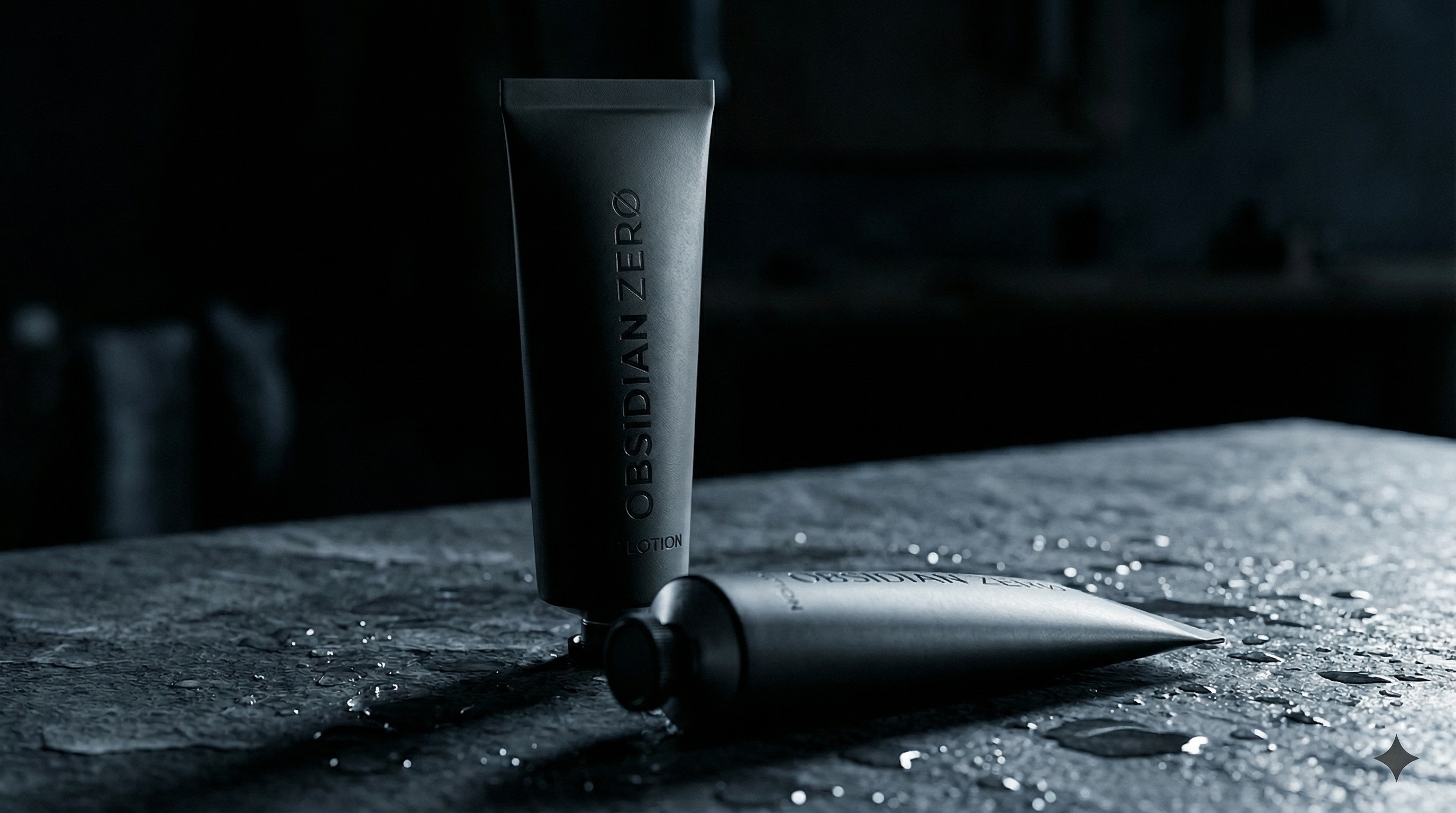
Men's Skincare Routine: The 3-Step System That Actually Works
According to Mintel's 2024 research, nearly half of US men still use no facial skincare products. Those who do often use too many products in the wrong order, see no results, and quit. Here's the only framework you need — and why simplicity wins.
Why Most Routines Fail
The most common mistake men make with skincare isn't laziness — it's complexity. They read a Reddit thread, buy seven products, use them for two weeks in the wrong order, see no results, and quit. Or they use nothing because the category feels overwhelming.
The skincare industry profits from complexity. More SKUs mean more revenue. But skin biology doesn't reward complexity — it rewards consistency. Your skin has one primary function: maintain a protective barrier against the environment. Everything you apply should support that function, not overwhelm it.
A 2025 study on skincare routine adherence found that complexity is the primary driver of inconsistency. Men who used fewer products with clearer purposes were significantly more likely to maintain their routine past the 8-week mark — the threshold at which most skin benefits become visible.
The 3-Step Framework
There are three things your face actually needs every day: clean skin, UV protection, and hydration. Every other product — serums, eye creams, toners, essences, mists — is optional. Get these three right for 60 days before adding anything else.
Remove oil, sweat, pollution, and dead cells without disrupting your skin's pH. Your skin operates at a slightly acidic pH of 4.5–5.5 — this is called the acid mantle. Bar soap sits at pH 9–11 and destroys it. The wrong cleanser triggers reactive oil production, making oily skin worse. An amino acid or glycine-based cleanser at pH 5.5 cleans effectively without disruption.
UV exposure causes up to 90% of visible skin aging — wrinkles, dark spots, loss of elasticity. No serum compensates for skipping this step. A 2024 PMC review found that 2+ hours of daily UV exposure correlates with 80% more wrinkles, 85% more pigmentation changes, and 75% more sagging. Apply SPF as your final morning step on clean skin.why SPF 50 outperforms SPF 30 in practice
If your SPF contains a moisturizer — which a well-formulated mineral SPF should — you don't need a separate product in the morning. At night, a lightweight hydrating layer accelerates barrier repair during sleep. If your skin feels comfortable without it, skip it. Most men with normal-to-oily skin don't need a separate AM moisturizer.
Morning vs. Night
Your morning and night routines have different goals. Getting them right means fewer products and better results.
Morning
Goal: Protection
- — Cleanser — remove overnight oil and sweat
- — SPF 50 — protect from UV before leaving the house
Night
Goal: Repair
- — Cleanser — remove the full day: pollution, SPF residue, sebum
- — Moisturizer (optional) — support barrier repair during sleep
You don't need different cleansers for morning and night. The same amino acid formula works for both. Morning cleansing removes overnight sebum and pillow residue. Night cleansing is more important — it removes accumulated pollution, SPF, and the day's oil production, all of which break down the barrier if left overnight.
Order Matters
Skincare products are applied thinnest to thickest. This isn't arbitrary — thicker products create an occlusive layer that prevents thinner ones from absorbing if applied afterward.
SPF applied before a serum traps the serum beneath a UV-blocking layer that was never designed to let products through. SPF is always the final morning step — applied to clean, dry skin with nothing afterward.
Adjusting for Skin Type
The 3-step framework is universal. What changes by skin type is product selection and whether you include a separate moisturizer.
Oily / Combination
Skip a separate moisturizer in the morning — your SPF formula handles hydration. At night, a lightweight gel moisturizer is optional. Focus on niacinamide in your cleanser to regulate sebum. See our full guide on oily skin in men.
Dry / Sensitive
Add a hydrating serum (hyaluronic acid) between cleanser and SPF in the morning. At night, use a slightly richer moisturizer. Look for ceramides in your moisturizer to reinforce the barrier.
Normal
Stick to the base 3 steps. If your skin feels comfortable throughout the day with no tightness or shine, you've found the right balance. Don't add products for the sake of it.
Post-Shave
After shaving, your skin barrier is temporarily compromised. Centella Asiatica in your cleanser reduces inflammation; SPF applied to freshly shaved skin is especially important. See our post-shave guide.
When to Add More Products
After 6–8 weeks of consistent 3-step use, your skin will reach a stable baseline. Sebum production normalizes, the barrier strengthens, and you'll know what your skin actually needs — versus what you thought it needed.
At that point, targeted actives make sense: retinol (0.025–0.1% to start) for collagen stimulation and anti-aging; niacinamide serum at 10% if pores and oil are ongoing concerns; Vitamin C in the morning for brightening and antioxidant protection. Introduce one product at a time, spaced 2 weeks apart, so you can attribute any reaction correctly.
Most men never need more than 4–5 products total. The 3-step foundation handles 80% of skin health. The remaining 20% is targeted intervention for specific concerns — not a default starting point.
Related Reading
The 3-step system, built in.
Amino acid cleanser + SPF 50 mineral moisturizer. Everything you need, nothing you don't.
Shop Obsidian ZeroFrequently Asked Questions
How long before I see results from a skincare routine?
Most skin changes require 6–8 weeks of consistent use before they're visible. Skin cell turnover takes 28–40 days depending on your age, meaning any ingredient needs at least one full cycle to show effect. Hydration improvements from a good cleanser can be felt within days. Oil regulation typically stabilizes around week 3–4.
Can I skip the morning cleanse?
If you cleansed thoroughly the night before, a morning rinse with water is enough for most men. Your skin doesn't accumulate significant debris overnight unless you sweat heavily in your sleep. The critical step is applying SPF — whether you cleanse first or just rinse is secondary.
Do men's skin care products actually need to be 'for men'?
No. Skin biology is largely the same regardless of gender. Men's skin does produce more sebum due to testosterone, which means formulations marketed for oily skin tend to work better. But 'for men' labeling is mostly marketing. Look at the ingredient list, not the gender positioning.
Should I use the same routine year-round?
The core 3 steps stay the same. In winter, you may want a slightly richer night moisturizer if your skin feels dry. In summer, a lighter SPF texture is preferable. The cleanser doesn't need to change. Don't overhaul your routine seasonally — just adjust one variable at a time.
Sources
- 1. More than half of US men now use facial skincare — a 68% increase from 2022 — Mintel, 2024
- 2. Facial Skincare Routine Adherence in the General Population — PMC, 2025
- 3. Photoaging: What You Need to Know About the Other Kind of Aging — Skin Cancer Foundation, 2021
- 4. A Comprehensive Review of the Role of UV Radiation in Photoaging Processes — PMC, 2024