Bar Soap on Your Face Is Wrecking Your Skin
Mintel's 2024 data shows adoption of proper facial cleansers among men is rising — but a large portion still reach for bar soap or body wash. The pH science explains why that choice drives the oiliness, breakouts, and tightness they can't figure out.
The pH Problem
Your skin has an acid mantle — a thin protective film formed from sebum and sweat that sits at a pH of approximately 4.5 to 5.5. This slightly acidic environment serves multiple critical functions: it inhibits the growth of harmful bacteria like Staphylococcus aureus, it keeps the skin barrier intact, and it maintains the enzymatic processes that allow proper skin cell turnover.
Traditional bar soap is produced through saponification — a chemical reaction between fat and a strong alkali. The result is a product that sits at pH 9 to 11. Every time bar soap touches your face, it alkalizes the acid mantle by 4–6 pH units. That might not sound dramatic, but pH is a logarithmic scale — a difference of 6 units represents a million-fold change in alkalinity.
Your skin recovers from this — but it takes 1–3 hours to fully re-acidify after a single wash with bar soap. If you're washing twice a day, your skin is spending a significant portion of the day with a disrupted acid mantle, vulnerable to bacterial colonization, transepidermal water loss, and chronic low-level inflammation.
What the Tight Feeling Actually Means
That tight, 'squeaky clean' sensation after using bar soap on your face is widely perceived as a sign of effective cleansing. It is not. It is your skin barrier in a state of acute disruption.
The tightness occurs because alkaline surfactants remove not just dead skin cells and sebum — their intended targets — but also natural moisturizing factors (NMFs) from within the stratum corneum. NMFs are hygroscopic molecules (urocanic acid, amino acids, PCA) that hold water inside skin cells. When they're stripped, the skin can't maintain its own hydration. The resulting tightness is dehydration, not cleanliness.
A well-formulated cleanser leaves skin feeling neutral within 30 seconds of patting dry. Not tight, not greasy, not 'refreshed' in any particular way — just comfortable. That neutrality is what proper cleansing feels like.
Body Wash Is Not Better
Many men who've abandoned bar soap for a body wash consider themselves upgraded. They're not. Body washes are formulated for skin that's covered by clothing — skin that's less sensitive, exposed to less environmental pollution, and has lower sebaceous gland density than your face.
Most body washes use sodium lauryl sulfate (SLS) or sodium laureth sulfate (SLES) as their primary surfactant. These are effective on body skin, which is thicker and produces less sebum. On facial skin — which, according to a meta-analysis of 57 dermatology studies, has more sebaceous glands per square centimeter than almost anywhere else on the body — sulfate surfactants over-strip and trigger reactive seborrhea.
Body washes also typically contain fragrance compounds that are sensitizing on facial skin. The face is more reactive than the body — the same fragrance load that causes no issues on your back or chest can trigger chronic irritation or contact dermatitis when applied daily to your face.
The Stripping Cycle Explained
Using the wrong cleanser creates a self-reinforcing cycle that's difficult to escape without understanding the mechanism:
Wash with bar soap / body wash
Alkaline surfactants strip sebum and NMFs. Acid mantle disrupted.
Skin detects oil deficit
Sebaceous glands receive signal to increase sebum production — reactive seborrhea.
Face feels oily within hours
More sebum than baseline is produced to compensate for the stripping.
Wash more aggressively
Frustrated by oiliness, men wash more often or use stronger cleansers.
Cycle repeats and worsens
Each aggressive wash compounds the barrier disruption. Oiliness becomes chronic.
Breaking the cycle requires switching to a pH-balanced cleanser and accepting that your skin will take 2–4 weeks to normalize. During that transition, sebum production decreases as the acid mantle stabilizes. Most men who switch see a marked reduction in midday oiliness by week 3. For the full approach to controlling oily skin, see our guide on oily skin in men.
What to Use Instead
Amino acid-based cleansers are the gold standard for facial cleansing. Amino acids are derived from natural proteins (often coconut or wheat-based) and function as surfactants at a pH naturally compatible with skin — typically 5.0 to 5.5. They remove oil, pollution, and dead skin cells without disrupting the acid mantle.
What to look for on the ingredient list
How Often to Cleanse
Twice daily — morning and night — with a gentle cleanser is sufficient for the vast majority of men. Even with the correct formulation, washing more than twice a day disrupts the barrier faster than it can recover.
If you work out midday, a water rinse is enough unless you were sweating heavily for an extended period. Surfactants are not necessary every time skin gets wet — in fact, over-cleansing with even a gentle amino acid cleanser can eventually cause barrier disruption if done too frequently.
Some men with dry or sensitive skin do better with just a water rinse in the morning and a full cleanse at night. If your skin feels tight or dry after morning cleansing, try switching to water-only in the AM. Evening cleansing is non-negotiable — it removes the day's accumulation of pollution, SPF, and sebum that, if left overnight, actively degrades the skin barrier.
Related Reading
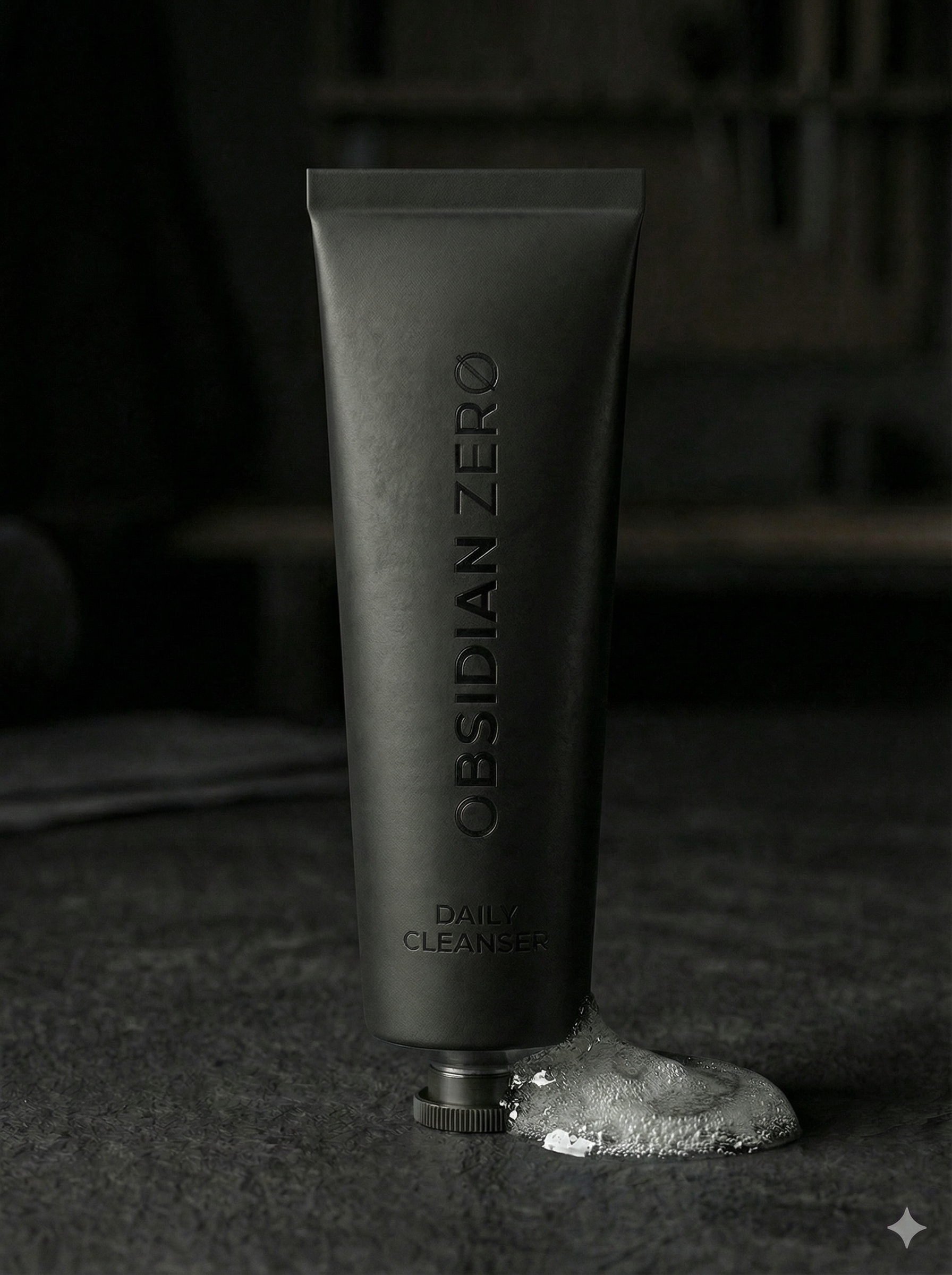
pH-balanced. Barrier-safe.
Sodium Cocoyl Glutamate + Niacinamide 5%. Cleans without stripping. No tight feeling.
Shop Obsidian ZeroFrequently Asked Questions
Is there a bar soap that's safe for the face?
Syndets (synthetic detergent bars) are formulated at skin-compatible pH and don't have the alkalinity problem of traditional soap. Brands like CeraVe and Dove make syndet bars. They're acceptable, but liquid amino acid cleansers still offer more formulation flexibility for including beneficial actives like niacinamide.
My skin has always been fine with bar soap — do I need to change?
If your skin is genuinely stable — not oily, not dry, no breakouts, no redness — you may have naturally resilient skin that recovers quickly. But 'fine' is a low bar. Most men who switch to a pH-balanced cleanser notice improved texture, reduced pore appearance, and less midday shine within 4–6 weeks, even if they didn't think their skin was problematic before.
What about micellar water as a cleanser?
Micellar water is a no-rinse option that works through gentle surfactant micelles. It's effective for light cleansing and makeup removal but typically doesn't remove sunscreen or heavy sebum buildup as thoroughly as a rinse-off cleanser. Fine as a supplement, not ideal as a primary cleanser for men.
How long until I see a difference after switching cleansers?
The reactive seborrhea cycle takes 2–4 weeks to break. During the first week, your skin may feel slightly oilier than usual as it adjusts to not being stripped. By week 3–4, sebum production normalizes and most men report visibly less midday shine and improved skin texture.
Sources